
Hawkeye Memories: 2001 Old Capitol Dome Fire
By UICA Staff
The University of Iowa community remembers the 2001 Old Capitol dome fire with personal accounts of where they watched the flames and the moment they realized the dome was lost.
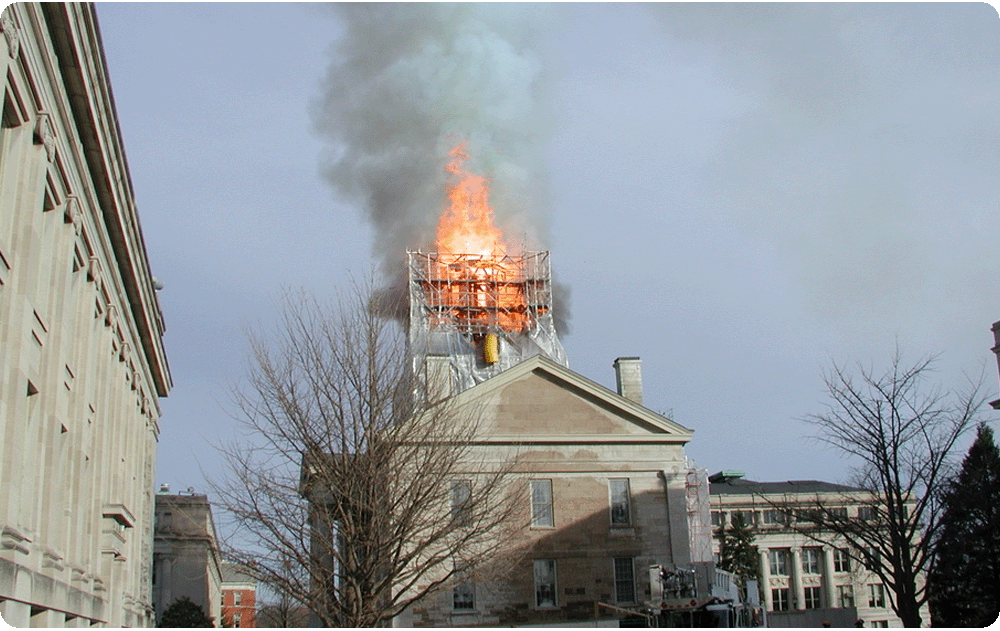 PHOTO: UNIVERSITY OF IOWA
O
n Nov. 10, 2001, the upper portion of the Old Capitol caught fire during renovations of the University of Iowa’s oldest building. In response to a recent Facebook post marking the anniversary of the Old Capitol dome fire, Hawkeyes described the moment they first saw the plume of smoke rising over Iowa City, the shock of realizing the university’s iconic landmark was burning, and the details that stayed with them long after the flames were gone.
Rebecca Whitaker (01BA)
I watched it burn from outside of Gilmore Hall. I had a white fleece on, and the way the wind was carrying the smoke, I ended up with gold particles in my fleece.
Jodi Klein
Proudly had a part in creating a new era of history. My grandfather has a part in regilding the dome in the 1950s and 1960s. Then I had a part in rebuilding it decades later.
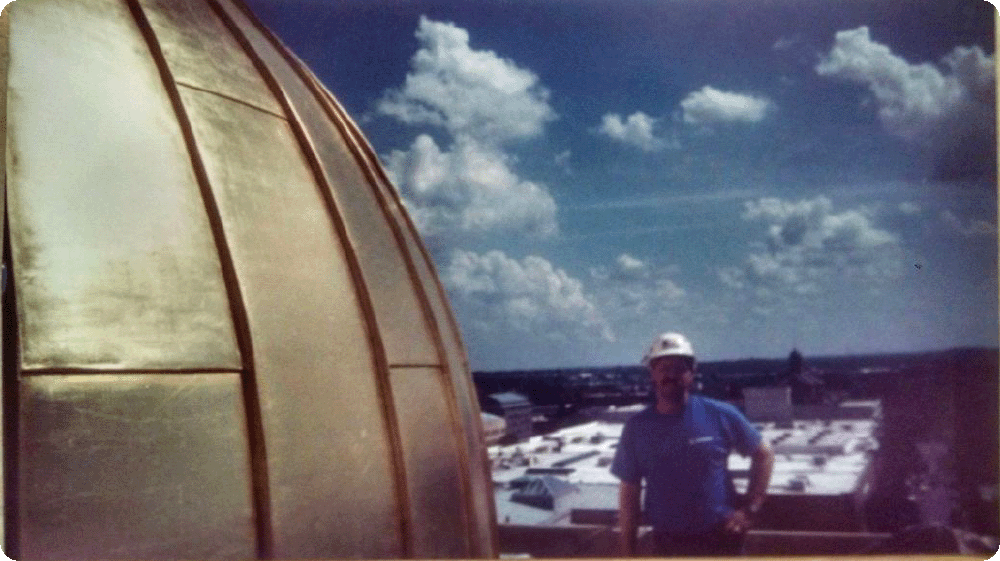 PHOTO: JODI KLEIN
Angela Hunt Wolf (03BS, 15PharmD)
I was driving the CAMBUS blue route that day. I didn’t see the active flames during my rounds that morning, but I recall that it smelled like a cozy campfire, there was immense chaos, and somber faces.
Shalla Ashworth (95BA)
I will never forget that day or the days following. As the assistant director of the museum, it was unreal to be inside and have someone tell you the building was on fire, and then to watch it burn from outside—hoping the brick firebreak holds and the fire doesn’t breach the building. By late afternoon I was finally allowed to enter the building to get my things and check for damage. God bless those architects from the 1920s for putting in the firebreak, as the interior floors had no fire damage. Water damage was another story, but of all the artifacts in the collection, only a few were damaged beyond repair. The library books, some original to statehood, were dry and safe. The fire department did an excellent job of moving items from wet areas and protecting them. So thankful to everyone for that day and the years following to bring the old girl back to life.
Taylor Reyhons (17BA)
My dad was a fireman that responded to this fire. I was 6 years old and stood outside to watch with my mom and brought him a sandwich and bottle of water.
Adam Stockman (03BA)
My dad, Joe Stockman, was the area mechanic for the Pentacrest at the time and fought the fire until the fire department got there.
Heidi Zahner Younts (97BA, 19MA)
I had just started a new job at University of Iowa Health Care and saw it out the sixth-floor window as I stepped off the elevator. I remember wondering if this was some kind of attack (only two months after 9/11) but also thinking, it looked kind of like a giant burning candle on a birthday cake.
Alison Jefferson (04BA)
I remember my roommate coming home and saying, "It's gone. The dome is just gone. You can see the sky right through the scaffolding!" It seemed like it took forever to rebuild, but I'm so glad they did.
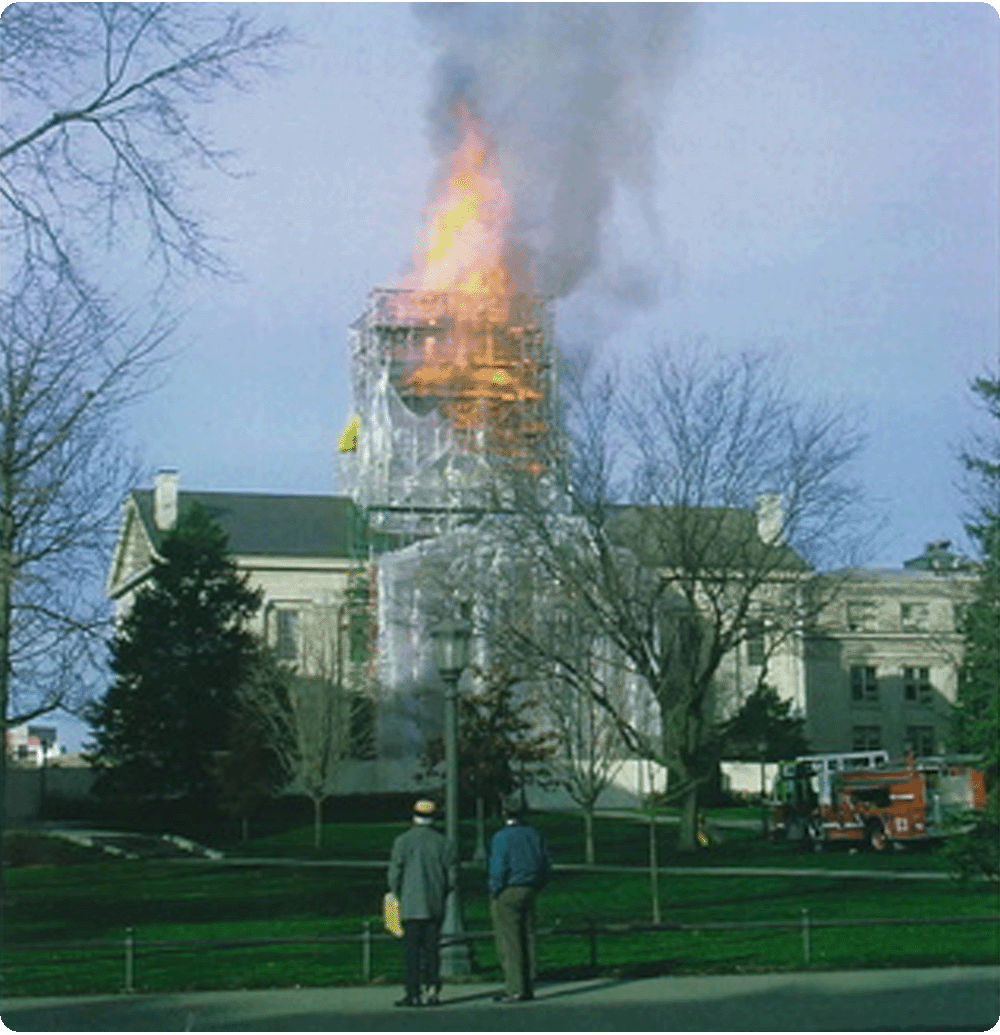 PHOTO: UNIVERSITY OF IOWA
Sara Bhat (04BSN)
I watched it from the west side of campus on the University of Iowa College of Nursing patio. We were about to take a break during a long lecture class. Needless to say, it was a longer break than usual.
David Ancelet (06BA)
I was in class in Macbride Hall, which gave a front row seat to all the action. Our professor kept trying to keep our attention, but with the building blazing, a helicopter overhead, sirens, and firemen yelling, we had no idea what he was saying. The distraction was too much to do anything but watch.
Paul Berg (02BA)
I was walking to the Lindquist Center for class, stopped and watched the fire from South Capitol Street. I couldn't believe my eyes and was immediately upset that it happened.
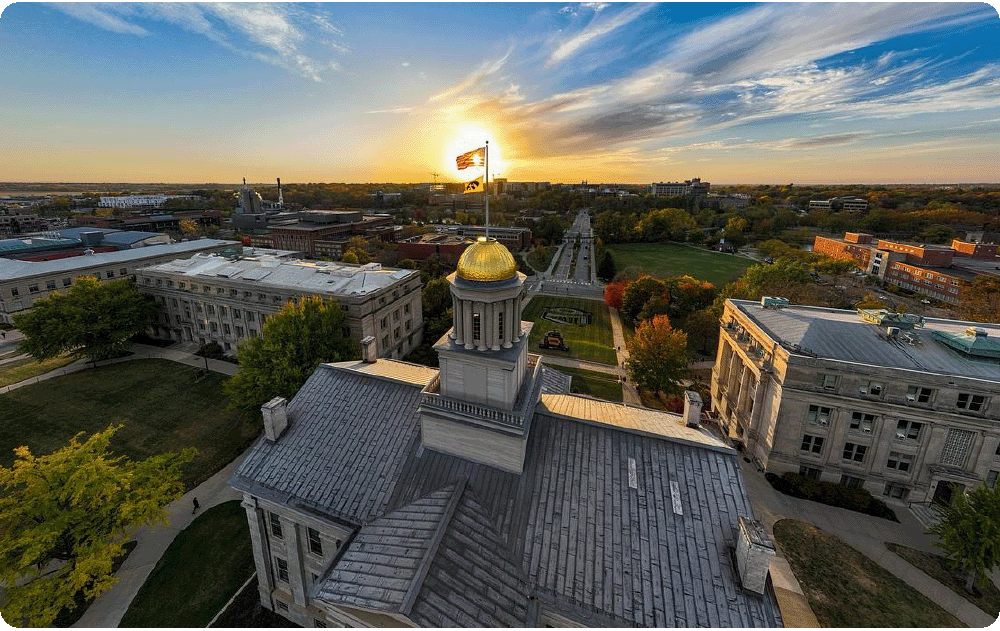 PHOTO: UNIVERSITY OF IOWA